
In software development, requirement management and engineering delivery are often disconnected. Project managers schedule in Lark, developers commit code, and operations release through the ticket system—high tool-switching costs and unsynchronized data leave "Was the requirement done?" and "Was the code released?" as two isolated concerns.
Now, with the seamless integration between Lark Project and Zadig, you can complete the entire flow from "requirement" to "release" directly within your task board.
# Trigger Releases Directly in Lark Boards
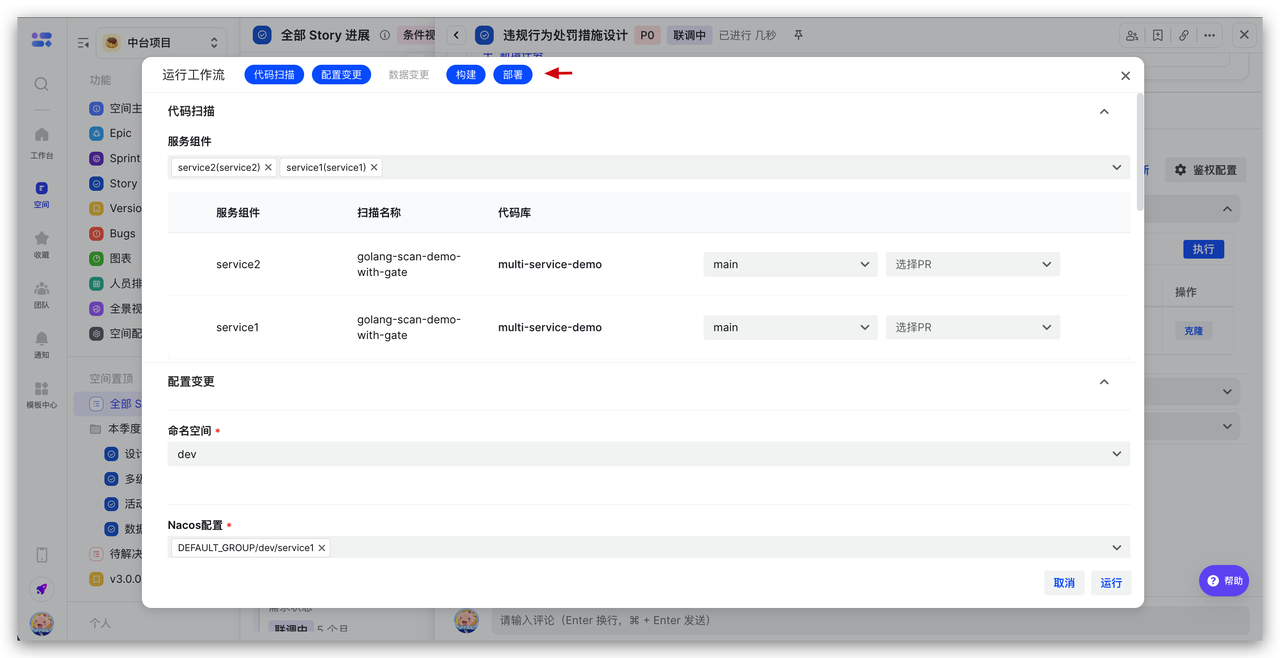
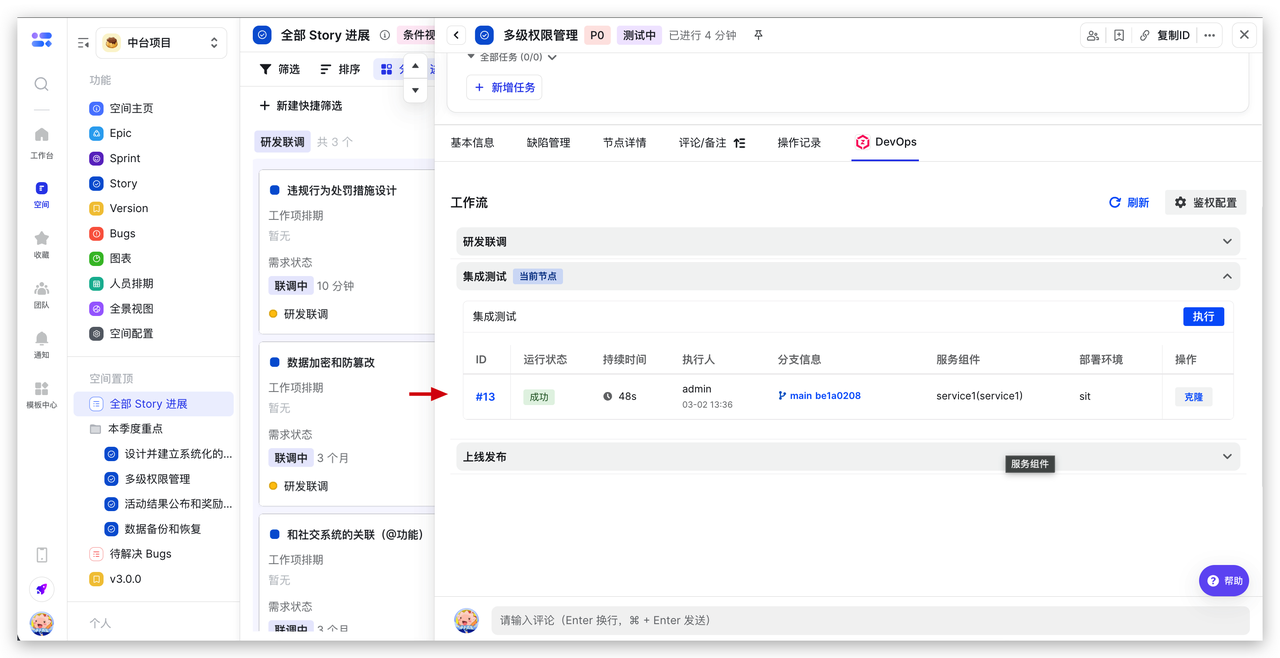
Developers no longer need to constantly swap between project management tools and CI/CD platforms. In the details page of a Lark work item, you can embed the Zadig DevOps plugin directly—deploy to dev environments, run automated tests, and launch production releases, all with a click.
Teams can also codify best practices like "Deploy to Development" and "Run Integration Validation" as standard actions for work items, ensuring that every requirement passes standardized checks before moving forward.
# Automatic Status Sync: No More Asking About Progress
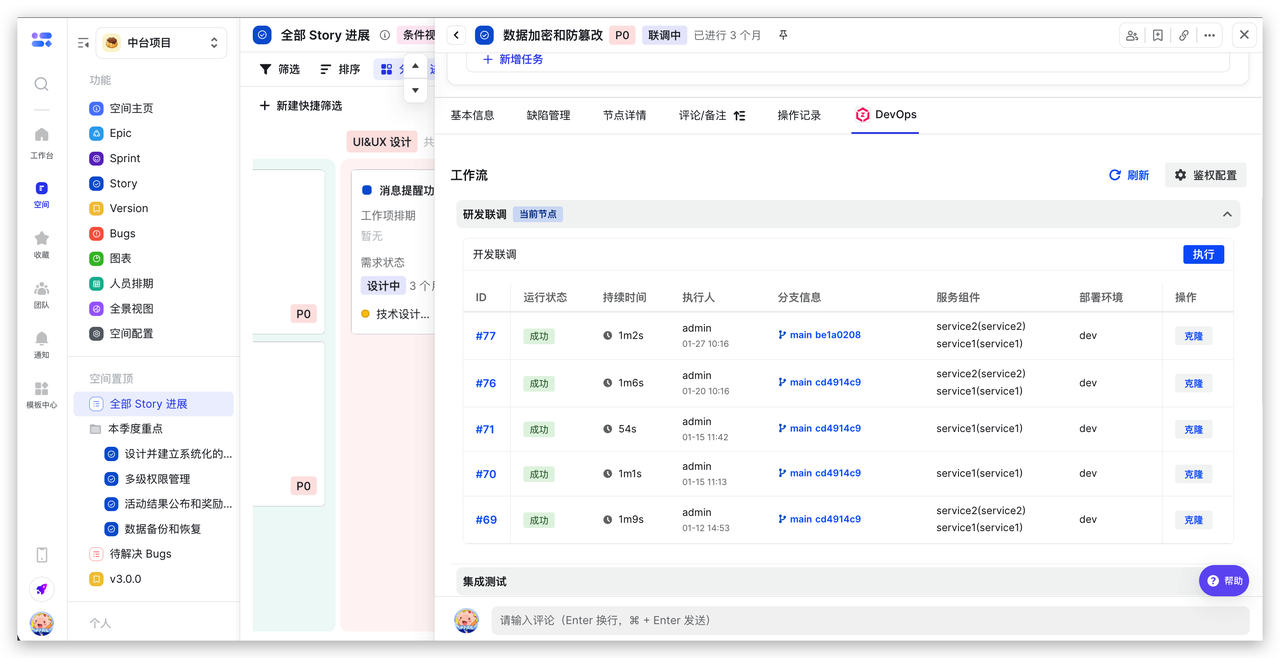
Zadig workflow execution results (such as build success/failure, code info, etc.) are automatically written back to the corresponding Lark Project tasks.
The "Completed" mark that project managers see is no longer checked manually—it's real feedback from Zadig's actual deployment results. Who, when, for which requirement, did what release, produced which version—all data is automatically linked and accumulated, forming a traceable closed loop.
# A Full Process Closed Loop: From Dev Self-testing to Production Release
This integrated solution covers the full software delivery lifecycle, allowing every activity to happen in one unified view:
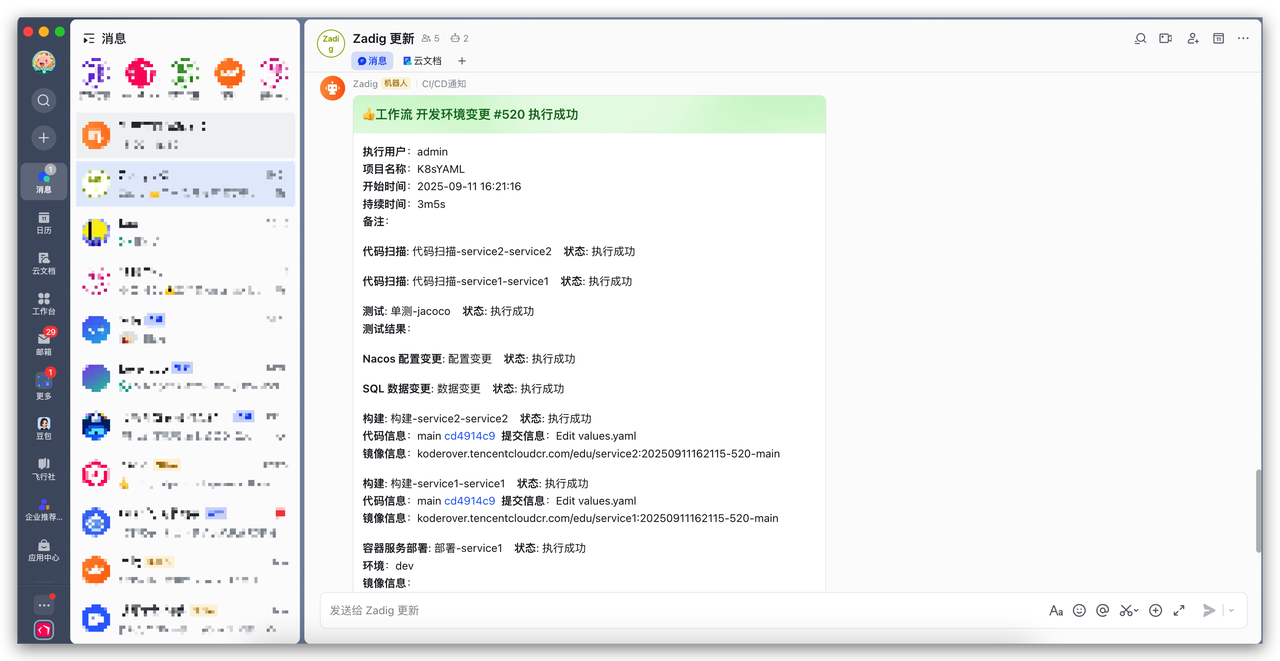
- Developer Self-testing & Integration: When ready for self-testing, a developer can trigger Zadig builds and deployments for multiple services directly from the Lark task card. Change information will be instantly pushed via Lark messages to team members, keeping environment details open and transparent.
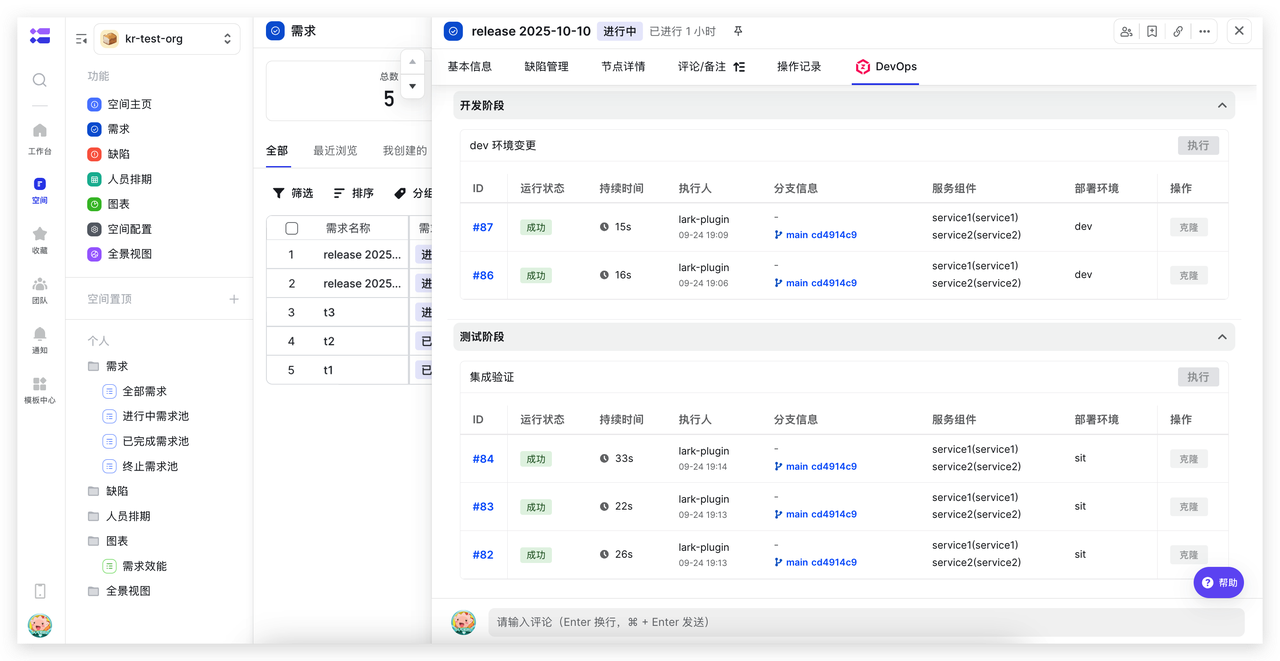
- Testing & Integration Validation: When a tester changes a work item’s status to "To Be Tested," preconfigured automated test cases are executed. The results are instantly fed back into the Lark task, realizing true "shift-left" testing and automated workflows.
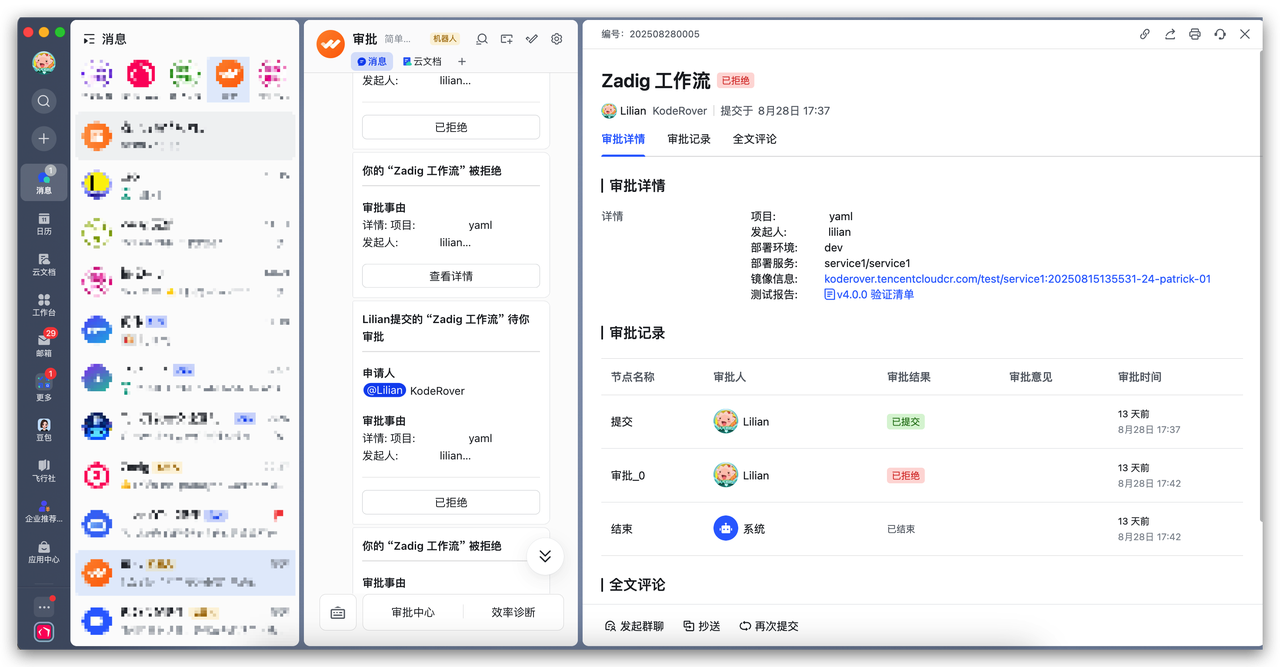
- Operations & Production Release: During the production release stage, Zadig provides a full workflow covering configuration changes, database changes, and business release steps. When the process reaches an approval stage, the system automatically sends an approval request through Lark to the approver. The approver can click the card to view detailed release contents (such as version diffs, changelogs), and approve directly within Lark—ensuring both security and reduced communication costs.

# Conclusion
The combination of Lark Project and Zadig is more than just using two tools together—it bridges the gap between management and engineering. The value of this connection goes both ways:
- For managers: you see real-time, accurate delivery progress, with data support for efficiency measurement.
- For developers: tool-switching costs are reduced by 40%, letting you focus on coding and delivery in a familiar interface.
When requirement management and code release are no longer separated, team collaboration and delivery quality naturally rise to a new level.


